


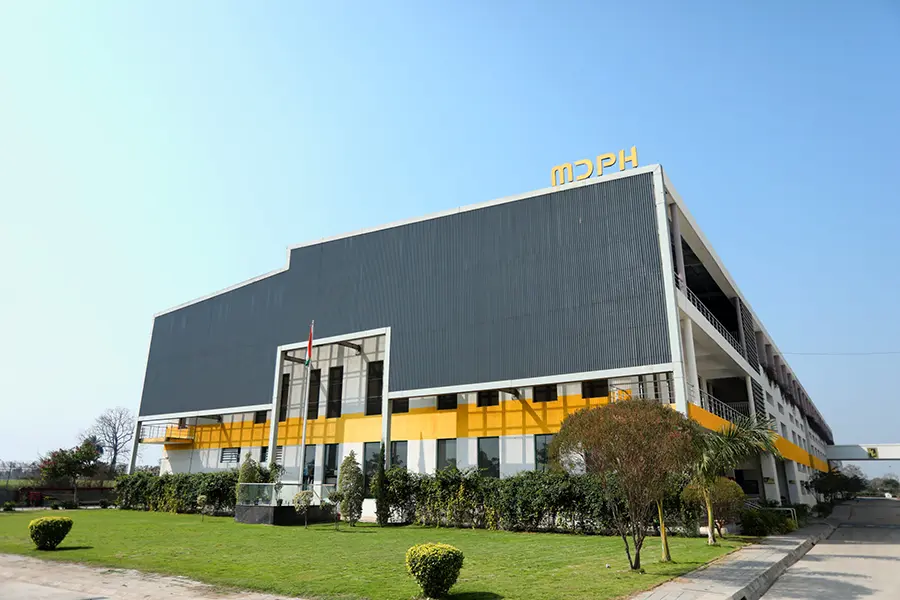











Industrial Visit at MDPH Kshipra: Bridging Classroom Learning with Real-World Experience
April 16, 2026
Haribhoomi Newspaper Highlights Major Raid on Counterfeit Zed Black Panch Deep Agarbatti in Chhattisgarh.
May 6, 2026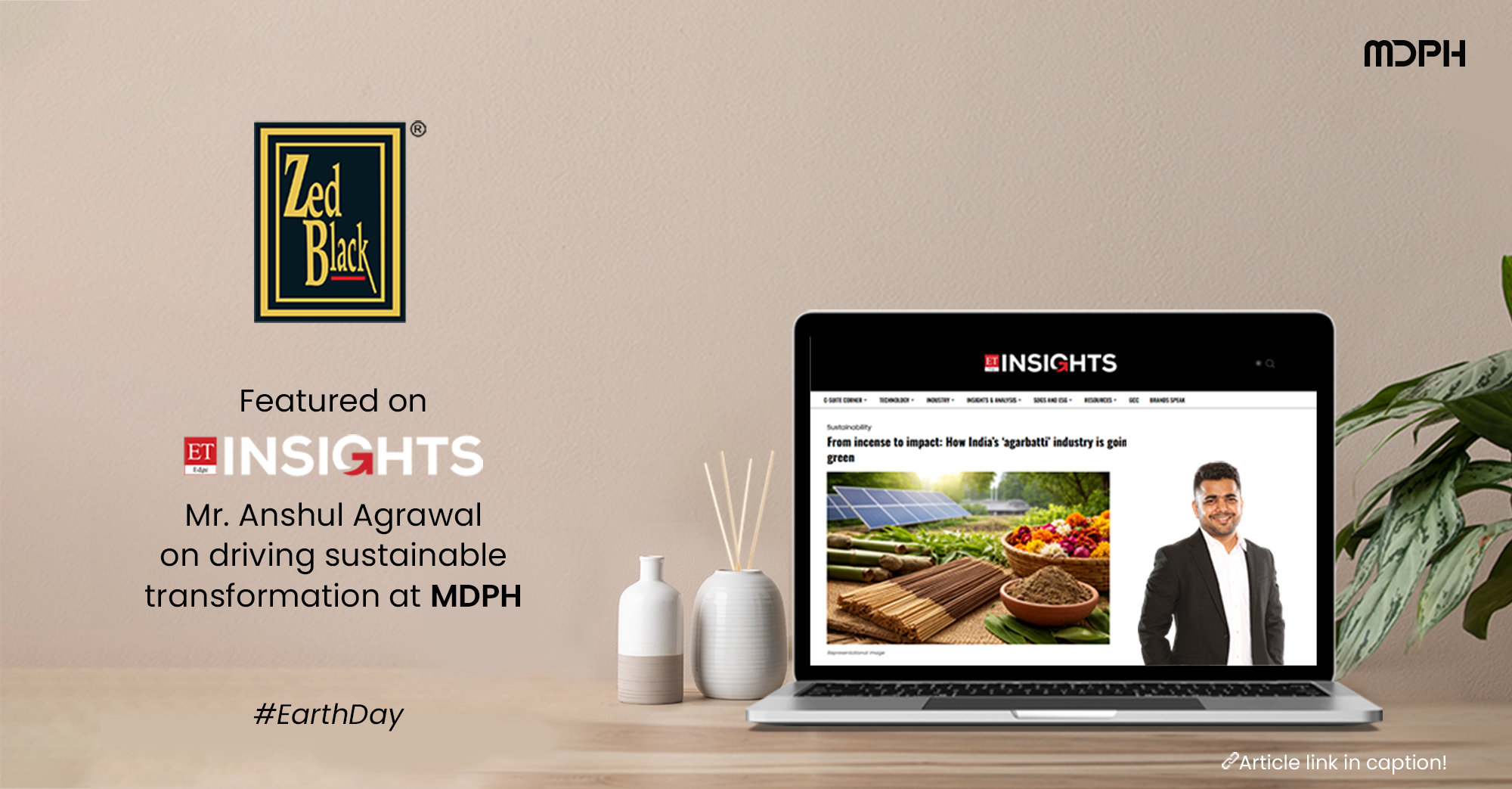
As sustainability becomes a defining priority across industries, even traditional sectors are reimagining their role in building a more responsible future. India’s Agarbatti industry, deeply rooted in culture, spirituality, and daily rituals, is now evolving beyond tradition to embrace environmentally conscious practices. At the forefront of this transformation is Mysore Deep Perfumery House (MDPH), through its flagship brand Zed Black.
As the world observes Earth Day on April 22, 2026, sustainability is no longer limited to discussions and policies; it is actively reshaping industries, including those deeply rooted in tradition.

As highlighted by Mr. Anshul Agrawal, Managing Partner, Mysore Deep Perfumery House (MDPH), this shift is not just necessary but inevitable. With India being the largest producer and consumer of agarbattis, the scale of the industry brings with it a growing responsibility to adopt cleaner, more sustainable practices.
MDPH has taken meaningful steps in this direction by integrating sustainability into both its products and operations. One of the most notable initiatives is the upcycling of discarded temple flowers into incense sticks, transforming what was once waste into a valuable resource. This not only helps reduce environmental pollution, particularly in water bodies, but also creates a circular system where waste is repurposed with intent and impact.
In addition to this, innovations such as the Gauved range, which utilizes cow dung-based inputs, reflect a conscious effort to move towards natural and renewable raw materials. The use of alternatives like bamboo, herbal powders, and essential oils further supports the industry’s transition towards environmentally responsible sourcing.
Equally important is the shift in how these products are manufactured. MDPH has adopted solar-powered manufacturing, enabling the production of 3.5 crore incense sticks every day using renewable energy. This integration of clean energy into large-scale operations demonstrates that sustainability and scale can go hand in hand.
Energy transition has been another key focus area. MDPH has invested in a 1.78 MW solar power plant to support its manufacturing operations, significantly reducing reliance on conventional energy sources. In addition, the use of biomass briquetting for fuel in drying processes further strengthens its move towards cleaner, self-sustained energy systems.

The company also emphasizes responsible operational practices, including waste segregation, recycling, and EPR compliance, ensuring that its environmental footprint is continuously reduced. These efforts reflect a broader commitment to not just minimizing harm, but actively contributing to a cleaner ecosystem.
Beyond environmental impact, sustainability at MDPH also extends to people and communities. The agarbatti industry supports a large workforce, particularly women in rural and semi-urban areas. With improved working conditions, structured employment, and skill development initiatives, the sector is contributing to more inclusive and sustainable growth.
What sets this transformation apart is the mindset driving it. As Mr. Agrawal highlights, sustainability is no longer seen as a limitation - it is an opportunity to innovate, create value, and build long-term resilience. The agarbatti industry today is not just adapting to change, but actively shaping a future where tradition and sustainability coexist seamlessly.
For MDPH, this journey is ongoing. Every initiative, every process, and every product is a step towards a more conscious way of doing business; one that respects both cultural heritage and environmental responsibility.
From incense to impact, the message is simple;
True progress lies not just in what we create, but in how responsibly we create it.
🔗Read the full article authored by Mr. Anshul Agrawal (Managing Partner, MDPH) at ET Edge Insights: